
Cliff Effect Resource Hub
What is the Cliff Effect?
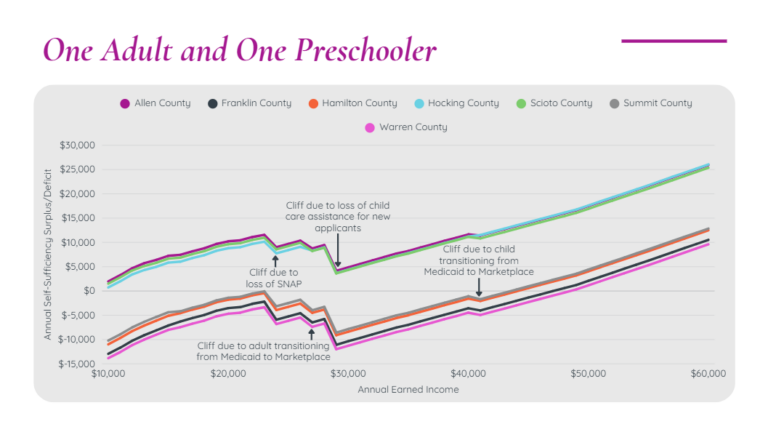
The Cliff Effect, or benefits cliff, occurs when a small raise triggers lost benefits, leaving workers with fewer total resources despite earning more.
It creates a disincentive for individuals to transition off public benefits – the exact opposite of what these temporary supports are intended to do.
The Women’s Fund has been studying the Cliff Effect for more than a decade, producing multiple reports that dive deeper into this topic. It is also a key focus of our advocacy efforts.
While there is no easy answer to this complex issue, the Women’s Fund is working hard to inform and collaborate with elected officials, business leaders, and community partners to identify critical solutions.
Why Would Someone Turn Down a Raise?
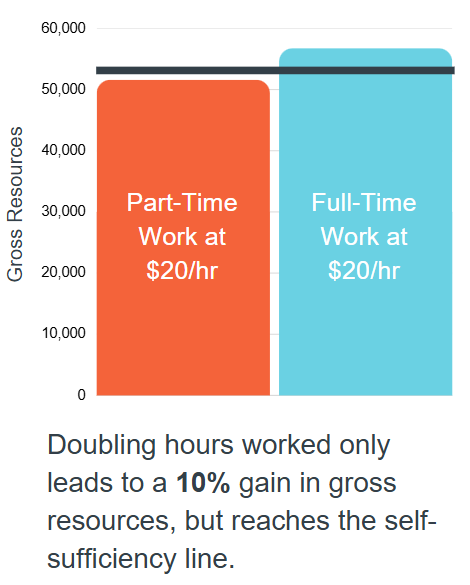
As a worker advances in their career and earns more, they may become ineligible for certain benefits. When the lost benefits is valued higher than the raise they’ve earned, their gross resources decrease. Workers have told us, “I’m working harder and harder, but I just can’t seem to get ahead.”
Important Realities
Our Research
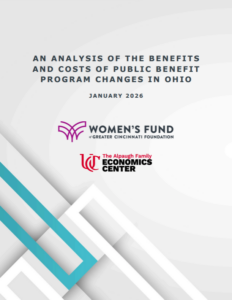
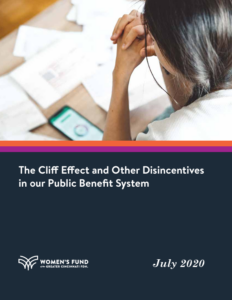
Since 2012, we have published seven research reports on the benefits cliff. In our most recent reports, we explore the Cliff Effect in seven Ohio counties, and take a deep dive into two cliffs that impact families the most – child care and health care cliffs. Read the reports or watch our recorded webinar to learn more.
Additional Resources
The Women’s Fund Self-Sufficiency Simulator allows you to explore what the Self-Sufficiency Standard is in all 88 Ohio counties, and what a monthly budget looks like for families of all sizes.
The Employer Toolkit is a collection of 60+ workplace policies to support, stabilize, and retain talent. Visit www.employertoolkit.org to learn more.
Questions?
If you have questions, feedback, or would like to discuss further, please contact us at [email protected]